I’ve written on this site before, years ago, about my long family history with Canadian Football and the Grey Cup. (I touched on this subject too.) Even more than hockey and baseball, I watch a lot less football (CFL or NFL) than I used to. But the Toronto Argonauts were my first favourite team, and I’ve been watching the Grey Cup since 1971. So, of course I watched on Sunday!
Without the Argos, I don’t have much of a rooting interest, but I saw plenty of Edmonton versus Montreal Grey Cup games in my early football fandom, and this one was very entertaining. Congratulations to the Elks (who, for those who don’t know, is the more politically correct name the former Eskimos adopted in 2022).
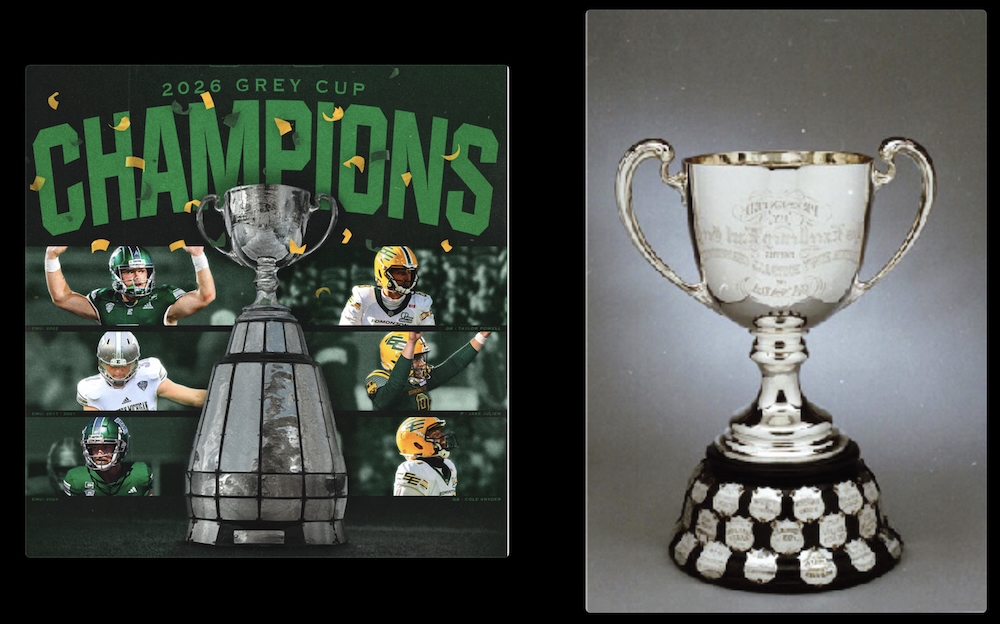
Not surprisingly, part of what I like about Canadian football is the long history of it. The Argos date back to 1873 and the teams in Ottawa, Hamilton and Montreal have roots to about the same time. Though the Grey Cup wasn’t donated until 1909, there has been a Canadian football (rugby) championship since 1884.
Lord Albert Henry George Grey, the 4th Earl Grey, and Canada’s Governor-General from 1904 to 1911, was a great sportsman – as many of his predecessors had been. By 1908, he had already donated namesake trophies for the Dominion trapshooting championship and for horse racing. A couple of years earlier, in the fall of 1906, the two top hockey leagues in Canada – the newly organized Eastern Canada Amateur Hockey Association and the Manitoba Hockey League – voted to allow professional athletes to play alongside amateurs. This was more than just a decision of whether to pay players or not, it was a true philosophical divide.
Many sportsmen, and many sports, in Canada were staunchly amateur and even if hockey was now allowing pros and amateurs to mix, other sports (notably football and rowing) were dead set against it. Many hockey players, wishing to maintain their amateur status for other sports, didn’t want to become professionalized … which they could be by simply agreeing to play against professionals even if they weren’t being paid themselves. So when the trustees in charge of the Stanley Cup agreed to allow professional players and teams to compete for their trophy in 1906–07, a need arose for a national hockey championship trophy for amateur players. In January of 1909, it seems that two prominent men in Canada were wishing to promote amateur hockey by donating a new championship trophy.
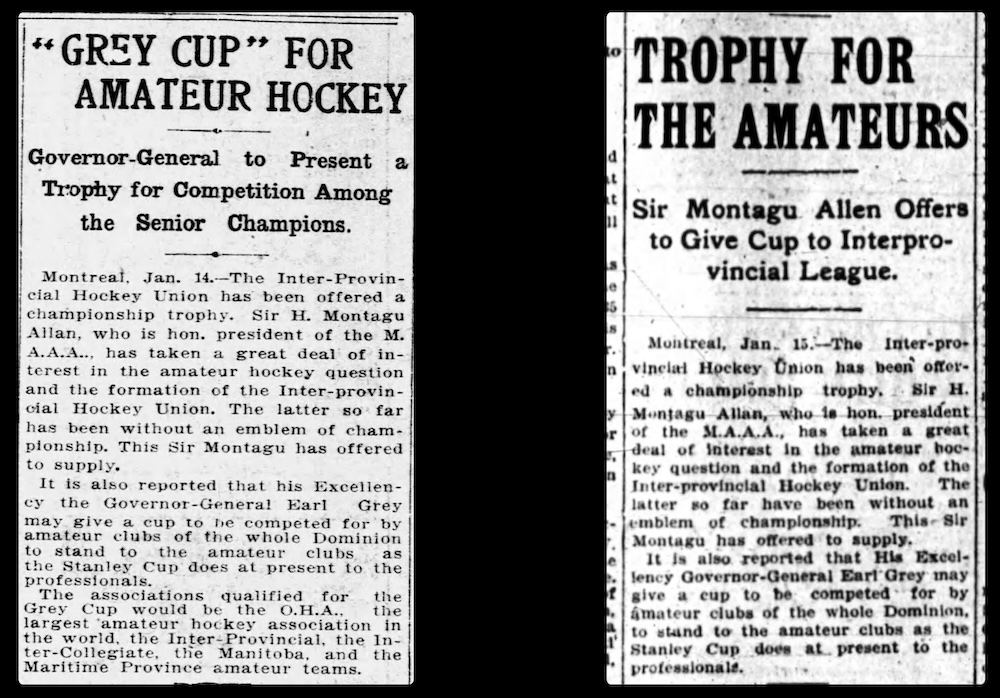
Prior to the 1908–09 season, the only amateur teams in the Eastern Canada Amateur Hockey Association, the Montreal Victorias and the Montreal Amateur Athletic Association, had broken away to join teams from Ottawa and Toronto to form the new Interprovincial (Amateur) Hockey Union. (The ECAHA dropped the first A and became the Eastern Canada Hockey Association.) On January 14, 1909, The Toronto Daily Star, followed the next day by The Evening Journal in Ottawa, reported that Sir H. Montagu Allan (Hugh Andrew Montagu Allan), who had succeeded his grandfather and father in running the Allan Steamship Line and who was prominent in many Montreal business, philanthropic and sports organizations, was going to donate a championship trophy for the new Interprovincial league. Earl Grey, it was said, was going to donate a trophy for the amateur hockey championship of the entire country. But the story changed the following month.
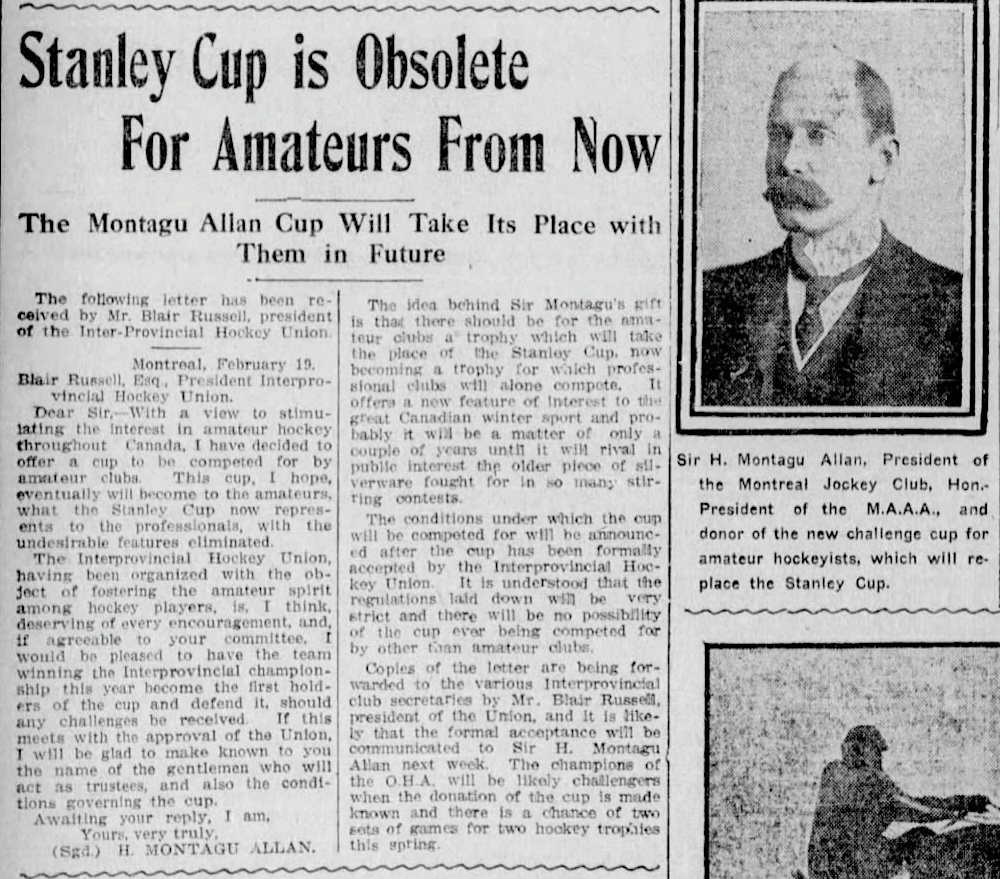
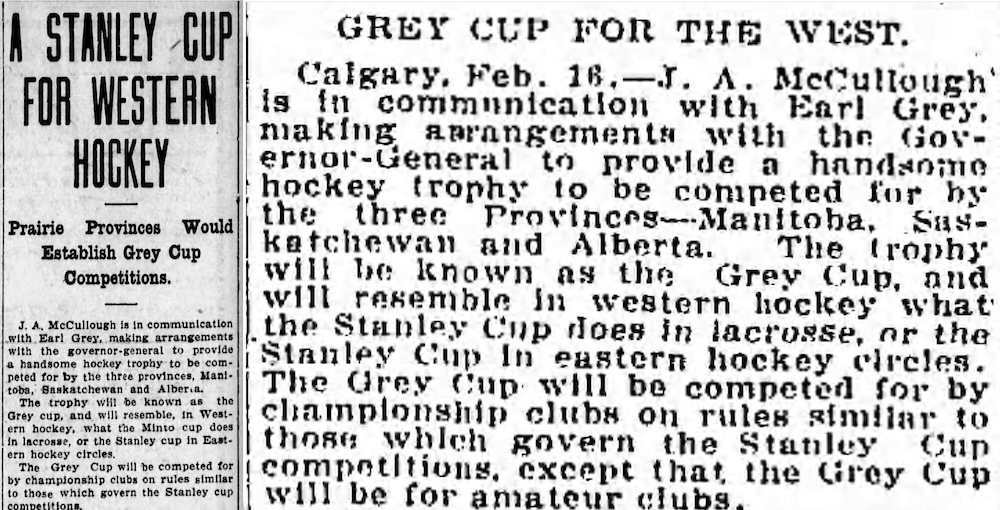
On February 12, 1909, The Morning Albertan in Calgary (and then numerous other newspapers all across Canada in the days that followed) reported that Grey was talking to J.A. McCullough of Calgary about a hockey trophy to be competed for by amateur teams in the western provinces of Manitoba, Saskatchewan and Alberta. Perhaps by that time, the thinking was that Allan’s trophy would be open to teams in Eastern Canada beyond the Interprovincial Hockey Union and that a similar trophy for the West would be appreciated. But on February 20, 1909, as reported in both The Montreal Daily Star and The Gazette of that city, Allan’s plan was to donate his trophy of the Interprovincial Hockey Union with the expectation that other teams would be able to challenge for it, thereby “stimulating the interest in amateur hockey throughout Canada.”
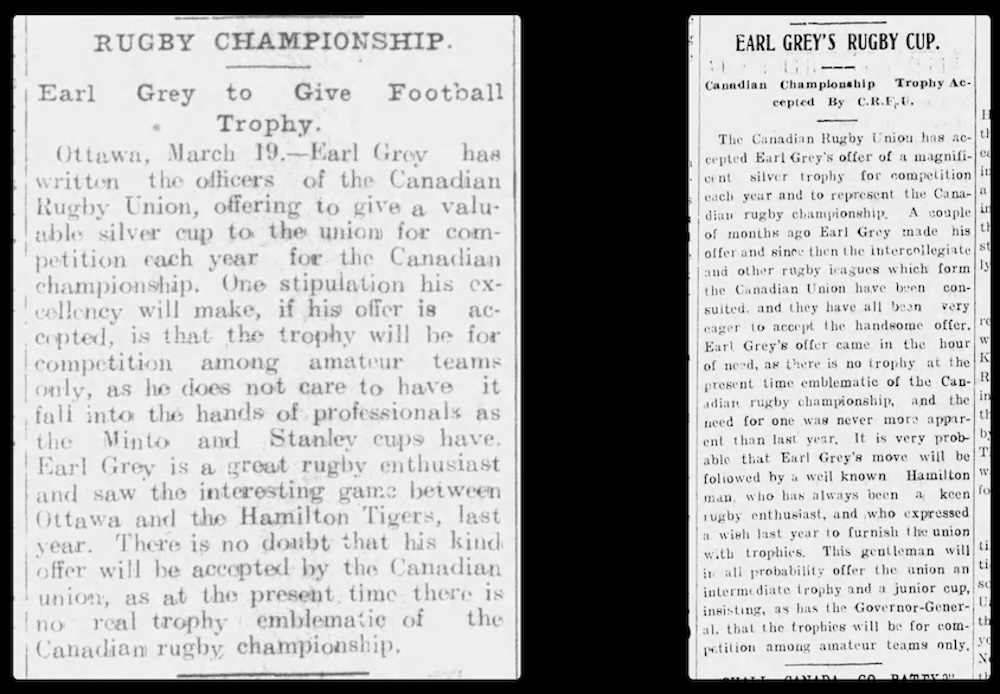
Though only teams from Ontario and Quebec would play for the Allan Cup in 1909 and 1910, by 1911 the Winnipeg Victorias had challenged for it, and though they won it by default that year they would defeat all comers from the East and further West in 1912. Perhaps Earl Grey saw the writing on the wall and thought that since hockey would have its national amateur championship trophy he should switch sports. From what I’ve been able to find, it seems that only Kingston newspapers had the story at first, but The Daily British Whig on March 19, 1909 and The Daily Standard on March 26 both reported that Grey was going to give a “valuable” and “magnificent” silver cup/trophy to rugby/football.
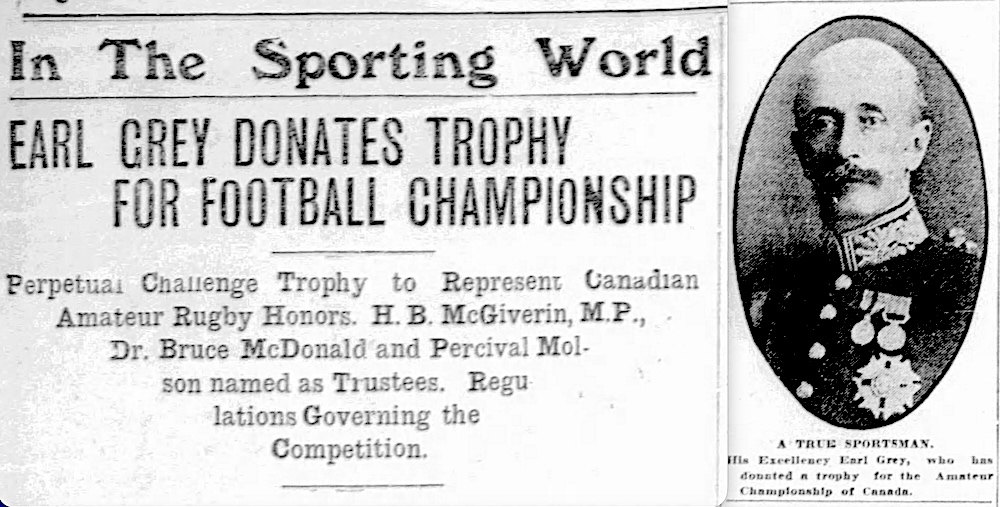
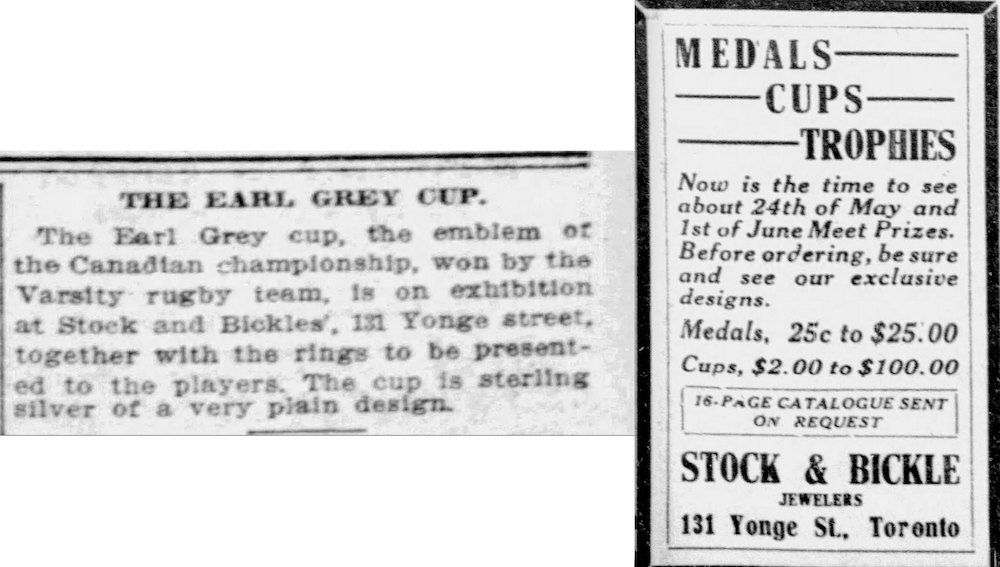
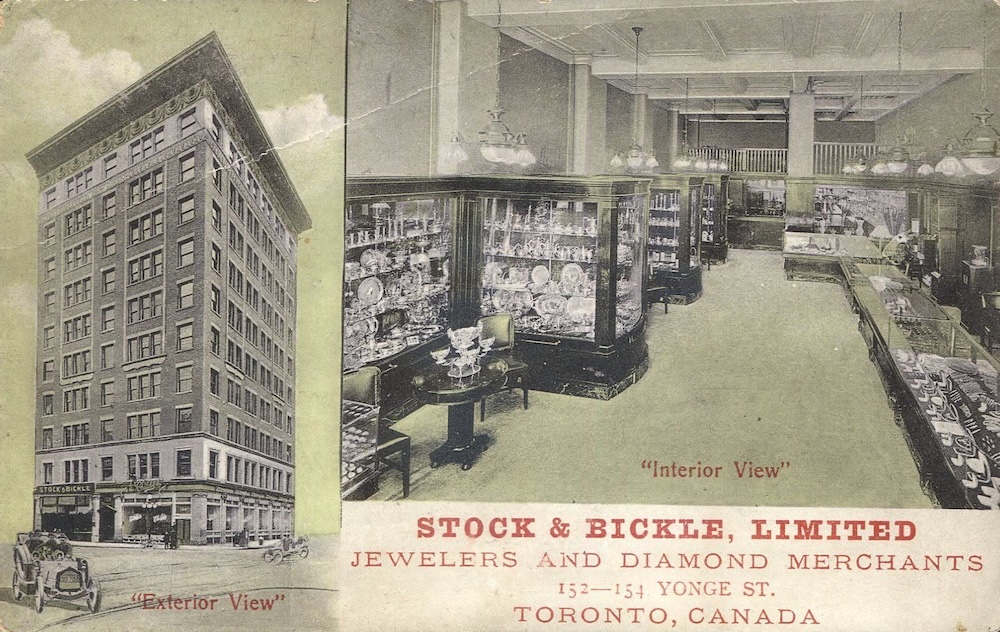
By June 1, 1909 – as reported in newspaper all across the country – Early Grey had decided to donate a trophy for the rugby football championship of Canada. But according to the web site of the Canadian Football Hall of Fame and Museum, “Having decided to offer the trophy, the Governor General promptly forgot about his promise and the cup was not ready to present to the first senior Dominion Champions, the University of Toronto, in December 1909. Two weeks prior to the championship game, a series of letters was exchanged and a hurried order placed with the silversmiths to produce a sterling silver cup, on a wooden base, total cost: $48.00. Three months later, in March 1910, the Grey Cup was presented to the University of Toronto.” Once the Grey Cup finally arrived in Toronto it went on display at a prominent local jewelers.