All posts by Eric Zweig

Price Check

I wish the Blue Jays had signed David Price. I’d love to have him back. Still, $217 million over seven years seems like too much money for too long a time. So, I’d like to take Mark Shapiro at his word that the $31 million per season will be better spent filling the various spots that still need addressing. It’s not that I doubt Shapiro’s integrity … but I don’t trust Rogers. My guess is they learned nothing from last season – “If you build it, they will come”, not “If everything goes perfectly, we might win” – and will put most of that money into their pockets while jacking up ticket prices (which they’ve already done!) and cable rates.

I admit I’m conflicted by the huge salaries in sports. On the one hand, if there really is that kind of money to be made, I like to see the players getting their share. On the other hand, the older I get the harder it is for me to cheer for people making five times as much money for every single game they play (and starting pitchers like Price watch four out of every five of those games!) as I’m earning in an entire year. But the truth is, no matter how much money is involved, fans and/or the media have always been angered by player salaries since the days they started getting paid.

Professional baseball in the United States dates all the way back to the mid 1860s. Pro hockey in Canada didn’t get started until the winter of 1906-07 when two of the country’s top leagues decided they would allow professional athletes play alongside of amateurs. This was quite the controversy in its day, and by the 1907-08 season people were already expressing amazement, if not quite outrage, at what the top stars were earning.
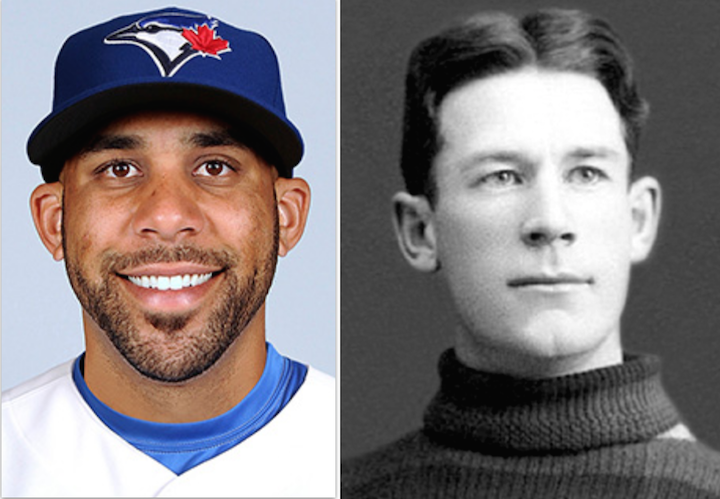
Price Phillips

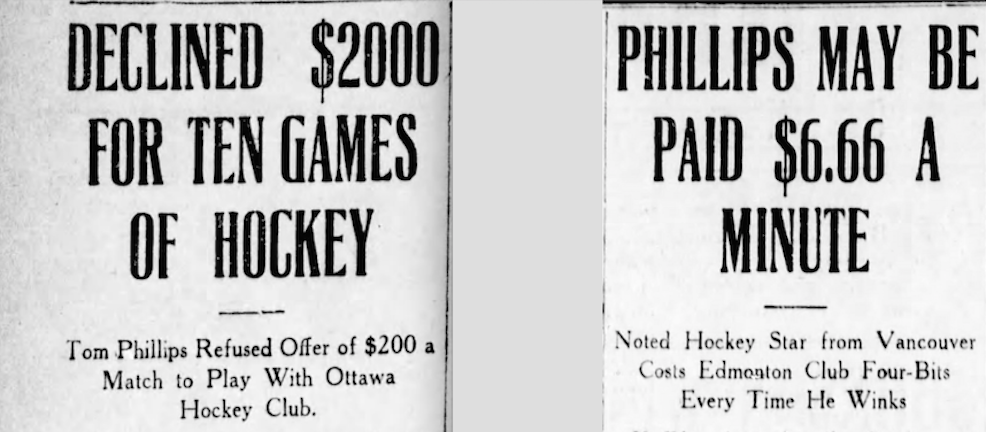
On December 15, 1908, a story in the Vancouver World discussed the lucrative offer Tom Phillips had recently turned down to return to the Ottawa Senators for the 1908-09 season. “Two hundred dollars a game for ten games of hockey!” the story started. “How would you like to be offered that amount? Would you refuse $2000 for practically two months work? There are few men who would; yet that is just what was declined with thanks the other day by Tom Phillips, the celebrated Ottawa hockey player, who is now in Vancouver.”

The story then went on to explain how Phillips, longtime captain of the Kenora Thistles who’d led them to the Stanley Cup in January of 1907, had received a salary of $1,600 to play in Ottawa during the 1907-08 season, but that wasn’t all. “Ottawa paid Tom Phillips $1600 cash,” the story said, “with a $60 a month job [which is a pretty fair indication that a yearly salary of $720 was not a bad bit of money for a working man in 1908] and all living expenses last winter, for approximately two months’ hockey, which figured out at ten league games.”

In all, Phillips earned about $1,800 for a little more than two months, and the paper compared his take to the $7,500 Napoleon Lajoie had been paid to play for the Cleveland Indians for a season of five months numbering approximately 154 games. “Getting down to real figures, Lajoie received about $49 every time he went on the diamond. Phillips practically cost his club … $180 ever time he went out to play a league game.” The hockey star, it was said, “would have received the stupendous sum of $17,720” if his season had as many games as a baseball season.

But the numbers were about to become even more outrageous!
Clips

On the same day the Vancouver paper reported that Phillips had turned down the $2,000 offer from Ottawa came news that he had agreed to join Edmonton for its two-game, preseason Stanley Cup series against the Montreal Wanderers at the end of December, 1908. It was soon learned that Phillips was promised $300 per game plus a bonus of $200 if the challengers beat the defending champions.

If Edmonton wins the Stanley Cup,” the Vancouver World trumpeted on December 26, “Tom Phillips will receive: $800 for two games, or $400 an hour, or $6.66 a minute, or $0.11 a second. A man is supposed to involuntarily wink about a dozen times a minute. Therefore every time Phillips bats an eyelash it costs the Edmonton club about 50 cents.”

The paper went on to explain that the highest-paid person in Canada was the Governor-General (by coincidence, Lord Grey, whom I wrote about two weeks ago) with an annual stipend of $50,000. That was broken down as $5.80 per hour for every hour of every day for an entire year … which meant Tom Phillips was to be paid more per minute by Edmonton to play hockey than Lord Grey made in an hour. Sixty-nine times more to be exact. At that rate, the World reported that he would make just over $3.4 million in a year. “Pierpont Morgan, John Rockefeller and Andrew Carnegie had better look out,” the paper mocked.

As it happened, Edmonton lost the Stanley Cup series. Phillips played the entire 60 minutes of the first game despite breaking his ankle partway through it. He had to sit out game two. It’s unclear if he actually received the full $600 or just $300 for his one game.
Burns Johnson

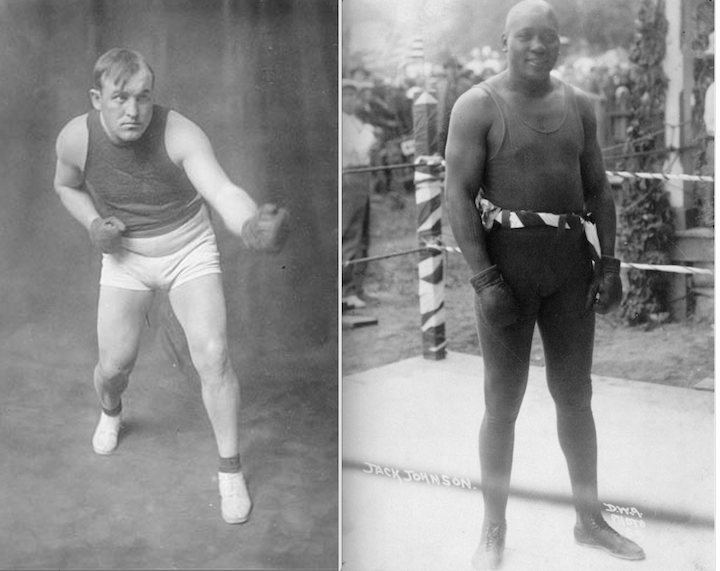
Whatever Phillips got, it paled in comparison to what another Canadian athlete earned at virtually the same time. On December 26, 1908, world heavyweight boxing champion Tommy Burns of Hanover, Ontario, was paid $30,000 to fight Jack Johnson in Sydney, Australia. The fight lasted 40 minutes, meaning Burns earned almost as much as per minute ($750) as Phillips could have potentially made in both games for Edmonton. Johnson – the controversial African-American whom many other white boxers refused to face – was paid $5,000 and won the fight.
A Spark of Greatness?

On Monday, Garret Sparks became the first goalie in Maple Leafs history to earn a shutout in his NHL debut when Toronto beat Edmonton 3-0. His emotional reaction in an interview after being named the game’s first star – and the shot of his parents in the stands – is definitely worth checking out.

I haven’t researched it myself, but according to hockey goalies.org, Sparks is the 23rd goalie in NHL history to begin his career with a shutout. Bad news for Leafs fans, but only a few went on to notable careers, and only one – Boston Bruins legend Tiny Thompson – went on to the Hockey Hall of Fame.

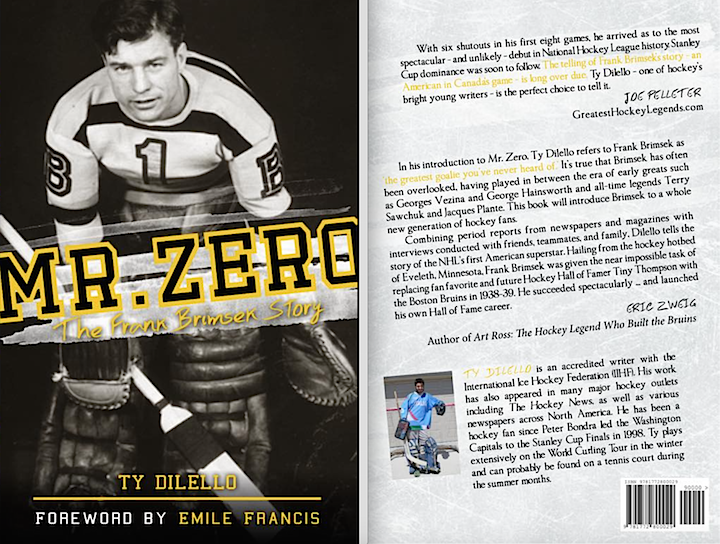
Though he didn’t begin with a shutout as Thompson had in 1928-29, the debut of Frank Brimsek in Boston 10 years later was even more spectacular. Brimsek – the first American-born NHL star – was in the news last season when Ottawa goalie Andrew Hammond tied his NHL record by allowing two goals or less in 12 straight starts to begin his career. Still, unless you’re into hockey history, Brimsek’s not a name many fans know today. That may change due to a book out soon by Ty Dilello.

Book

Ty and I have never met in person, but we have been touch online. He’s only about 23 years old … and he’s the first person I know who grew up to become a writer after reading my books for kids when he was a boy! So, I’ll admit, it was a kick when he sent me an early copy of his Brimsek book and asked me to provide a “blurb” for the back cover.

The book is called “Mr. Zero” and if you know anything at all about Frank Brimsek it’s likely to be that that was his nickname, coined after the string of shutouts he put up at the beginning of his career. But pretty much everything you think you might know about him is wrong. Not meaning to steal any of Ty’s thunder, but some of this already appears in my Art Ross biography, so here’s a brief rundown of the fact versus fiction.

It’s generally reported that Art Ross’s decision to trade Tiny Thompson and replace him with Brimsek came as a bolt out of the blue. While it’s true that Boston fans – and even Bruins teammates – were shocked by the move, it had actually been a long time coming. Thompson had first told Ross he was contemplating retirement at the end of the 1936-37 season. He even suggested Brimsek as his replacement, and so Ross signed him for the Bruins farm team. Thompson was talking retirement again in April of 1938 and there was soon talk that he and Brimsek would share time in the Bruins net during the 1938-39 season.

painting
Painting by Darrin Egan. Contact him at: inthebluepaint@gmail.com

Even so, Brimsek was ticketed to return to the minors until Thompson suffered an eye injury late in training camp. Brimsek opened the season with the Bruins, posting a 3-2 win in Toronto and a 4-1 victory in Detroit. With Thompson now recovered, Brimsek was dispatched to Providence. Boston went 3-1-1 in the next five games with Thompson allowing just 8 goals in 310 minutes for a 1.56 average. Still, Ross had liked what he’d seen in Brimsek and on November 28, 1938, it was announced that Thompson had been sold to Detroit for $15,000. At the time, it was the richest deal for a goalie in NHL history.

The other thing you might know about Brimsek is his run of six shutouts in his first eight games, but that’s not quite true either. That total ignores Brimsek’s first two starts at the beginning of the season and only begins from the time Thompson went to Detroit. After recording those two early wins, Brimsek actually lost his first start as Boston’s number-one goalie with Thompson gone, but then he bounced back with three straight shutout wins. After a 3-2 victory in his next start, Brimsek strung together another three shutouts in a row. He was now 9-1-0 in 10 games with six shutouts and a 0.70 goals-against average and was the talk of the hockey world.

Paper

Brimsek finished the 1938-39 season 33-9-1 and led the NHL with 10 shutouts and a 1.56 average. He became the first goalie to win both the Vezina Trophy and the Calder Trophy as rookie of the year, and he led the Bruins to their first Stanley Cup championship since Tiny Thompson’s rookie season in 1928-29. He never put up such spectacular numbers again, but Brimsek did win the Stanley Cup for a second time in 1941, the Vezina again in 1942 and was a perennial All-Star both before and after taking two years out in the prime of his career to serve in the U.S. Coast Guard during World War II.

Grey Cup Memories

The Canadian Football League runs deep in my family. My father and his father were at many of the classic Grey Cup games played at Varsity Stadium in the 1950s. My grandfather had Toronto Argonauts season tickets for years, and I attended my first game in his seats with my father at CNE Stadium in 1971. After my grandfather died in 1972, my father was surprised to learn that those tickets actually belonged to my grandfather’s business and didn’t transfer to him. So, in 1973 my father ordered his own season tickets for our family. This meant a move from the old, covered grandstand to the new bleacher seats on the other side of the field.

In those days before the stadium was renovated for the Blue Jays, CNE Stadium held 33,000 fans and was always sold out for the Argos. I remember attending a game in August when the temperature was 100 degrees (no Celsius back then!) and a playoff game in November that ended in a blinding blizzard. But with Ottawa set to face Edmonton in the Grey Cup this weekend, I have a memory of a very different sort. Many will remember Ottawa’s last-second victory (over Saskatchewan) with the Tom Clements to Tony Gabriel touchdown pass in 1976. Others, the 1981 game where Dave Cutler’s last-second field goal kept the Eskimos dynasty alive with a win over the surprising Rough Riders. But I remember 1973.

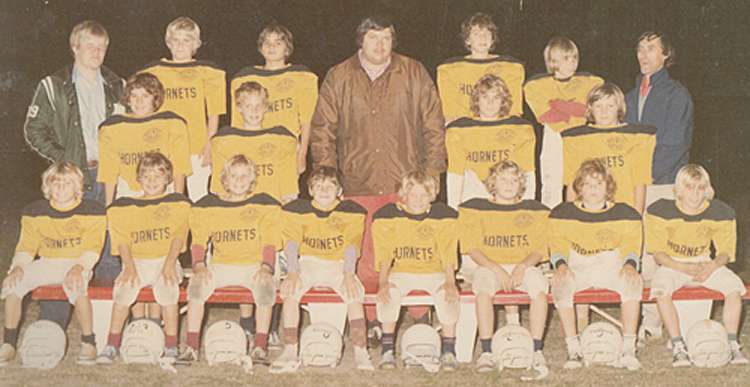
EZ FootballMy first football team. I’m in the top row, next to our enormous coach.
The first Grey Cup game I remember watching is 1971, when Leon McQuay’s late fumble sealed Toronto’s loss to Calgary. I started playing football in 1972, and my greatest athletic accomplishment remains leading our Zion Heights Grade 9 intramural football league in scoring in 1977. I loved football. My brother David liked it a lot. Jonathan … not so much. Still, my parents tried to keep things fair. We all took turns going to games, and we all got to fill out the ballots in the program to vote for the Shopsy’s team MVP. One lucky winner among the MVP voters would receive two tickets to the 1973 Grey Cup game which was in Toronto that year. Jonathan won! He couldn’t really have cared less, and I wanted to go so badly… but it was his ballot that was drawn and his name on the letter that arrived at our house with the tickets, so he went to the game and I watched on television.

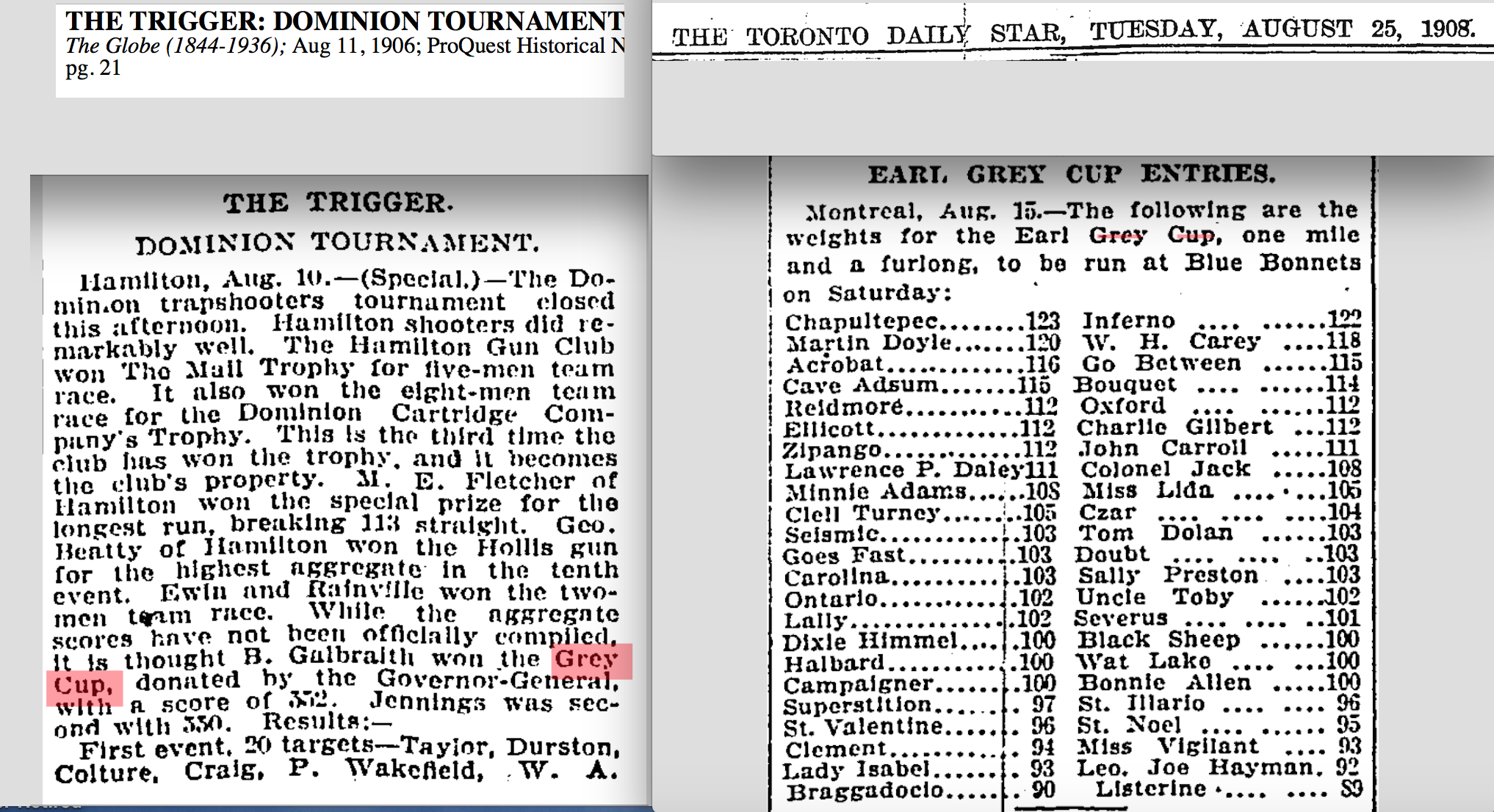
Long before any of us starting watching, Albert Henry George Grey, the 4th Earl Grey, was Canada’s Governor-General from 1904 to 1911. He was a big sports fan – as many of his predecessors had been. By 1908, he had already donated namesake trophies for the Dominion trapshooting championship and for horse racing.

Earlier

According to almost everything you’ll ever read about the history of the Grey Cup, the Earl originally intended to donate a new trophy for the senior amateur hockey championship of Canada in 1909 since the Stanley Cup had been recently taken over by the professionals. But Canadian businessman Sir Hugh Montagu Allan had already beaten the Govenor-General to the punch, so he gave his trophy to football instead.

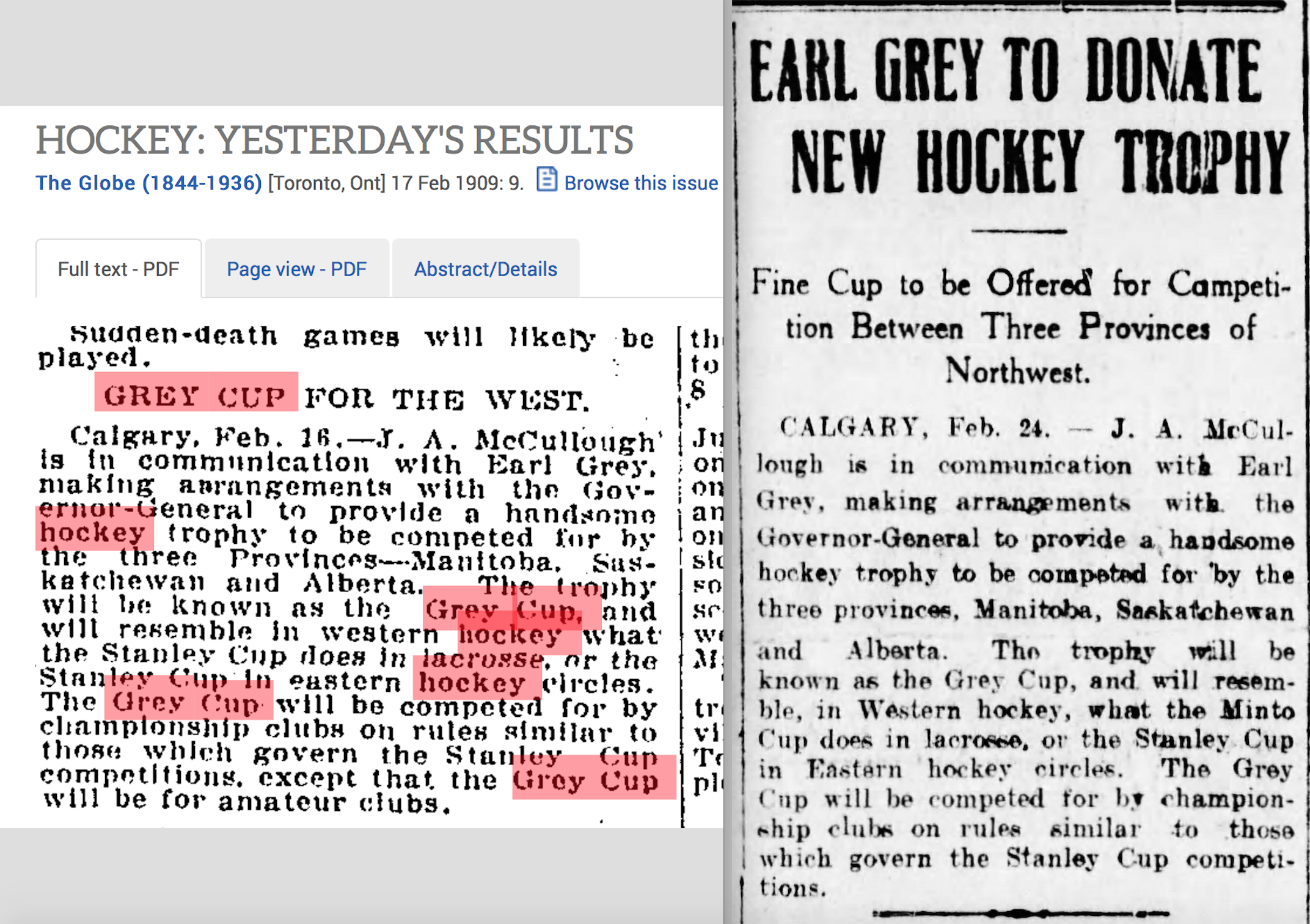
HockeyThe article on the right is from Vancouver Daily World on February 24, 1909.

But this story is only partly true. In an era when so many Canadian championships were contested exclusively in the east, the announcements concerning Earl Grey’s new trophy in February of 1909 clearly state that it was intended only for competition among western hockey teams in Manitoba, Saskatchewan and Alberta.

FootballFrom the Toronto Daily Star, June 1, 1909 and the Brandon Weekly Sun, June 3, 1909.
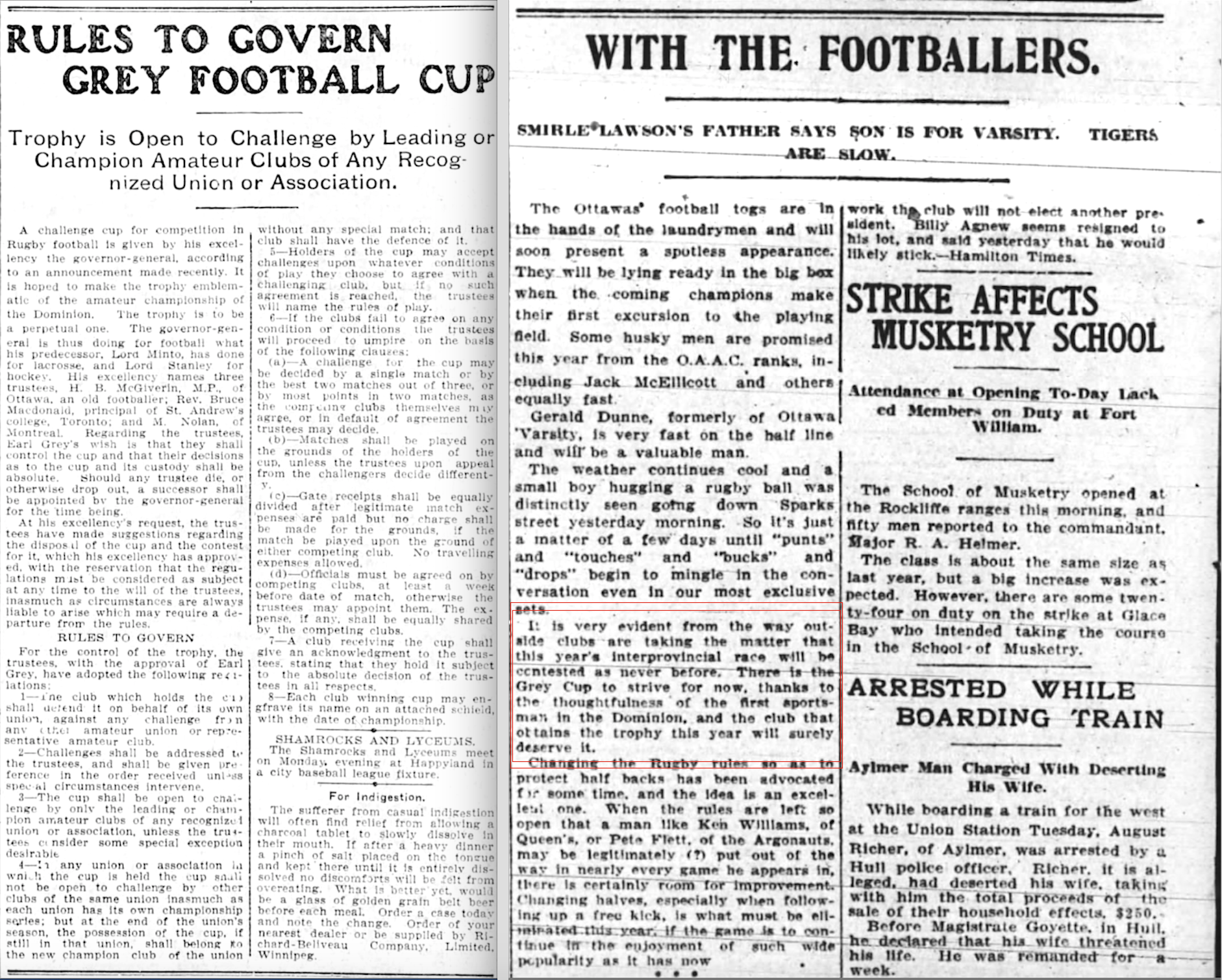
It’s unclear what caused the change in sports, but on June 1, 1909, it was announced that the Grey Cup would be awarded for the amateur rugby football championship of the Dominion of Canada … which had been contested since 1884, but apparently without any tangible reward. (Ironically, no Western Canadian team would be able to compete for this new trophy until 1921!)

Rules plus
From the Winnipeg Tribune, June 12, 1909 and the Ottawa Journal, September 2, 1909.

By the time football teams were preparing for the new season in September of 1909, the Grey Cup was already being touted as a boon to the game. First won by the University of Toronto on December 4, 1909, the evolution of the trophy and its many great moments are much to long to go into here, but the Grey Cup remains a unique part of Canada’s sporting history – and of my family history too.

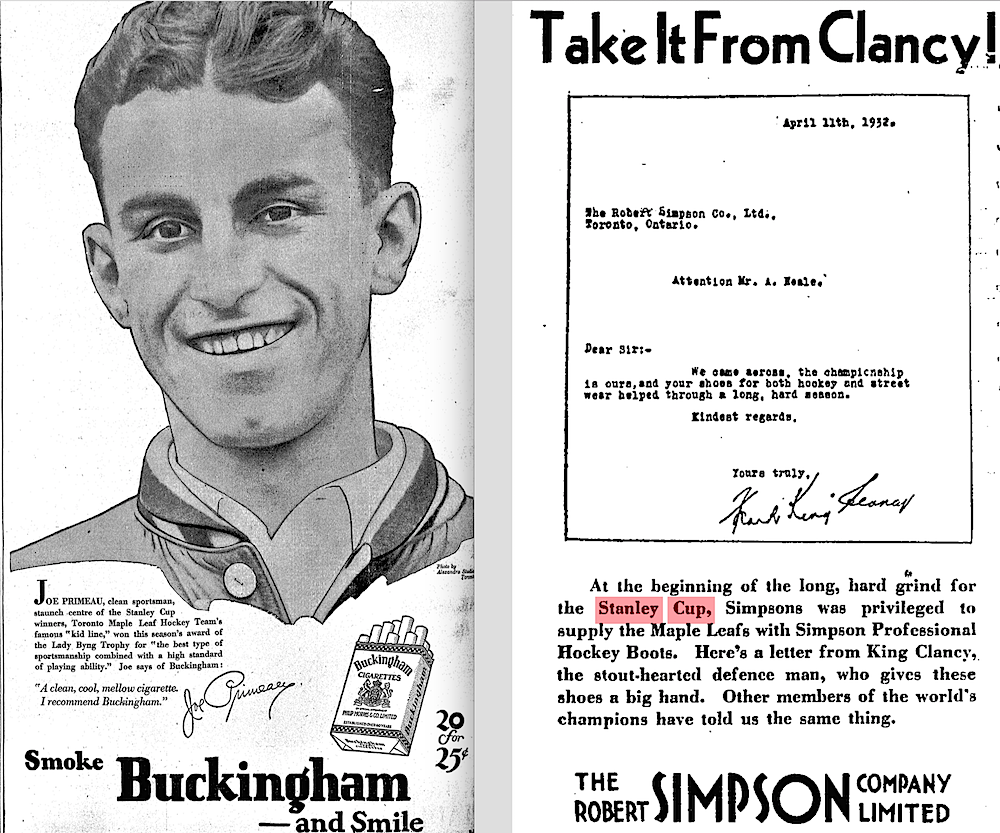
Hockey Ads From 1932

They’re not going to win the Stanley Cup this year, but the Leafs have been on a bit of a roll lately. Still, no one’s likely to be wondering this time if it’s the cigarettes or if it’s the shoes!

Leafs Ad 1

(In case you can’t read the small print, the cigarette ad reads: Joe Primeau, clean sportsman, staunch centre of the Stanley Cup winners, Toronto Maple Leafs Hockey Team’s famous “kid line,” won this season’s award of the Lady Byng Trophy for “the best type of sportsmanship combined with a high standard of playing ability.” Joe says of Buckingham: “A clean, cool, mellow cigarette. I recommend Buckingham.”

Clancy’s letter says: Dear Sir – We came across, the championship is ours, and your shoes for both hockey and street wear helped though a long, hard season. Kindest regards, Yours truly, Frank King Clancy.)

Lest We Forget

Over the last few years, I’ve taken part in the Remembrance Day service in Owen Sound on behalf of Beth Ezekiel Synagogue. Unfortunately, I’m unable to participate this year, though I know the job will be more than capably handled in my absence.

Anyone who knows me can attest that I’m hardly the soldiering type, but I’ve often wondered over the years if I would have felt compelled to enlist during World War I or World War II. While I can’t see myself rushing off to join the army the moment war was declared, would I have succumbed to the pressure as the years went by?

WWI Posters

I can remember my father telling me once that when was a boy, he wished that the Second World War would last long enough for him to get in it. Those were different times, and he was very young. (He was still only about seven when World War II ended.) He had an uncle serving overseas, who was badly wounded in the fighting. When he finally returned home, my father would pester him to tell him his war stories. He never did. He could only convey that you wouldn’t want to be there.

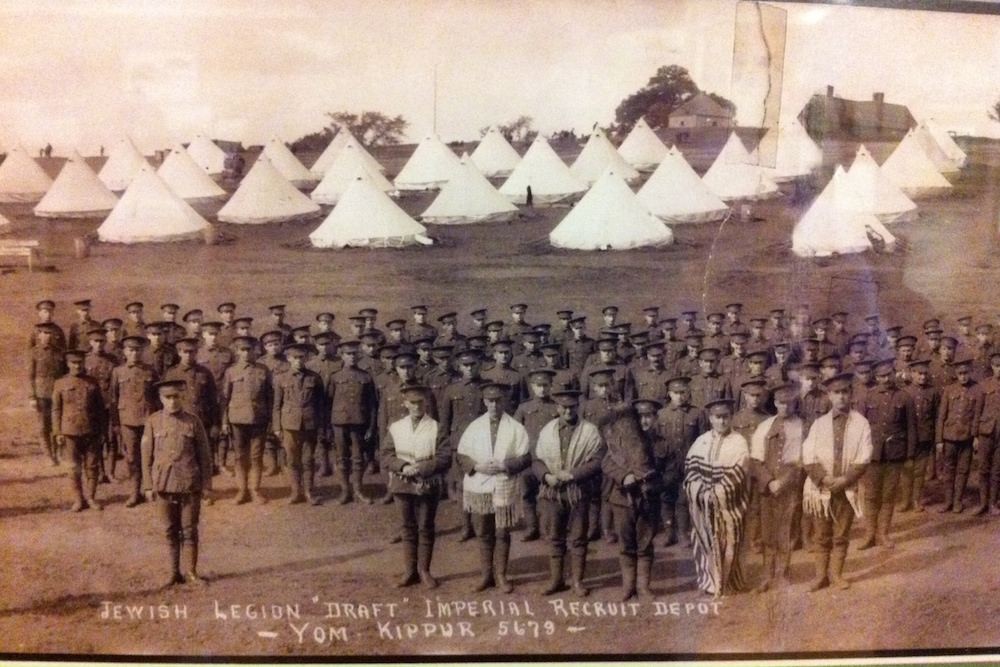
Had we been of age 100 years ago, would my friends and I have been able to resist the call? Especially if it meant the chance as Jews to prove ourselves as Canadians? I found a story online in which Eric Levine, secretary-treasurer of Toronto’s Jewish Canadian Military Museum (which, until this writing, I did not know existed!) says that during the First World War, 38 percent of all Jewish males older than 21 in Canada served in the Canadian Expeditionary Force. I can’t recall where, but I know that I’ve read that in both World War I and World War II, Jewish participation was in greater numbers than their percentage of the population would have indicated.

Jewish League

If you’re interested to know more, you can follow any and all of these links:

Jewish Canadian Military Museum
Halifax Chronicle Herald
Ontario Jewish Archives
Jewish Legion – Wikipedia

And, on a lighter note, this was recently brought to my attention: “At the stroke of 1 pm on October 12, the end of World War I will be closer in time to the [Toronto Maple Leafs’] last Stanley Cup win than that 1967 win is to today.” I haven’t actually done the math myself, but even if it’s off, it’s awfully close!

Building a Better Puck

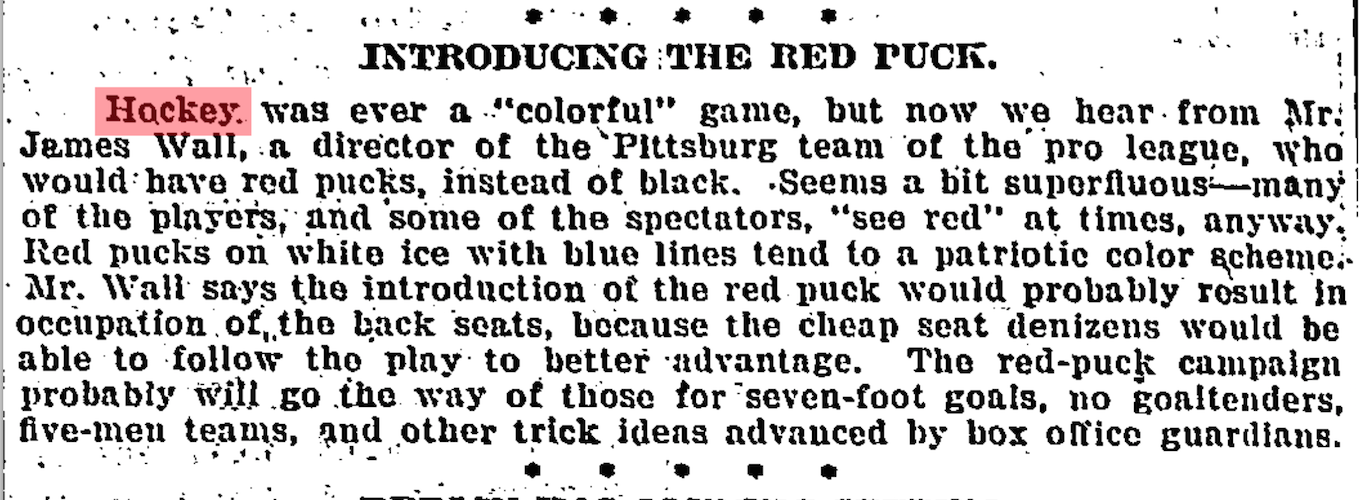
Back in March, I wrote about Frank Patrick trying to come up with a glowing puck for better visibility … back in 1941. The other day, I came across this, which appeared in Sports Editor Frederick Wilson’s column in Toronto’s Globe newspaper on February 17, 1927:

Red Puck

Interesting that Wilson lumps this in with “other trick ideas” such as seven-foot nets and five-man teams, which I also wrote about back in March. I’m not going to go into to bigger nets again, but just consider this…

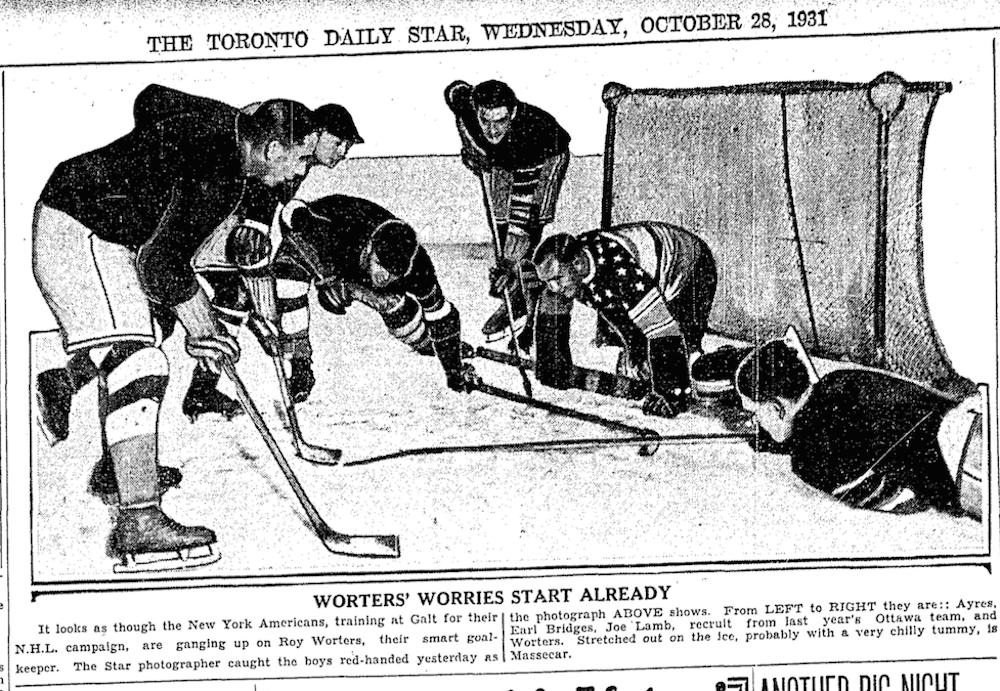
Space available around 5’3” Roy Worters, the smallest goalie in NHL history:

Worters

Space available around 6’7” Ben Bishop, the tallest goalie in NHL history:

Bishop

Regardless of who’s in the Hockey Hall of Fame, which one looks easier to score on?!?

But let’s get back to pucks for a moment. Art Ross III shared this story with me during the writing of Art Ross: The Hockey Legend Who Built the Bruins. Among his many contributions to the game, Art Ross is famous for designing (refining, really) the modern hockey puck. But his son, the second Art Ross and father of Art III, figured he had a way to make it even better. This would likely be some time during the late 1950s. It didn’t work out.

Dad got the idea for a new puck, one with more color and, therefore, “followability.” Spaced at equal intervals around the outer inter edge of the black puck were orange inserts. The color matched the label on the puck. I seem to recall that the first trial version had triangular wedges – think pie slices – but the final product had something on the order of a hollowed out cylinder: a round disk on the top and bottom, same beveled edges, but the disks would be connected by a thin strip of black rubber which was counter-sunk into the edge rubber. It’s a bit hard to describe, but the point was that there were six orange implants on the outer edge of the puck giving it enhanced visibility and a cool look if you spun it slowly. Dad, ever creative and thoughtful, decided to call his innovation an “Art Ross Puck.” You didn’t need a focus group for that one.

We lived in [the Boston suburb of] Newton at the time on the Charles River, a good part of which froze each winter. My sisters and I were the OPTs – Official Puck Testers – and Dad joined us a couple of times. It was great fun zipping around whacking the disc with vigor and, best of all, we had almost an unlimited supply of pucks! It wasn’t very long, however – like two days, maybe – before the OPTs noticed a problem. On a couple of pucks, the implants had fallen out. This looked ugly and could cut someone. Soon most of the pucks had missing inserts, and Dad was beside himself. He immediately called the manufacturer, and they had a heated discussion about rubber glue, or more accurately, glue for rubber. Two or three weeks later a couple of boxes of new pucks showed up. Not willing to wait, the OPTs whacked the pucks around the driveway. Alas, the same result: little pieces of orange puck edge all over the place.

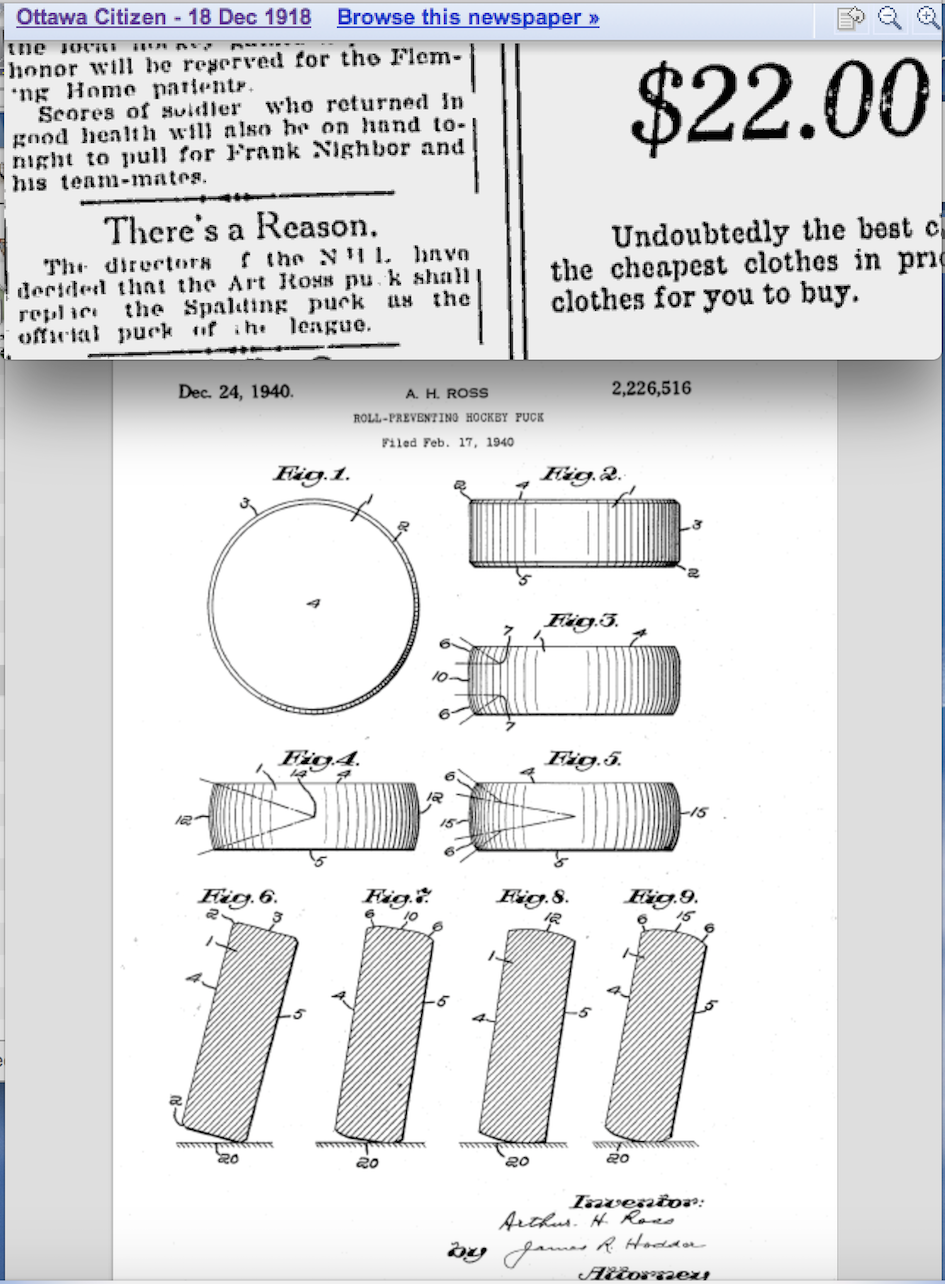
In case you haven’t read my book yet (and if not, why not?!?), the NHL first started using Art Ross’s puck design during its second season of 1918-19. The bevelled edges reducing rolling and injuries,  but the NHL didn’t always stick with it. The advent of artificial rubber during World War II improved Ross’s design. He received a U.S. patent in 1940 and the new Ross-Tyer puck was adopted as the NHL’s official puck before the 1940-41 season. Ross’s puck patent has long since expired, but the basic design has never really changed.

Patent

Promoting Art Ross

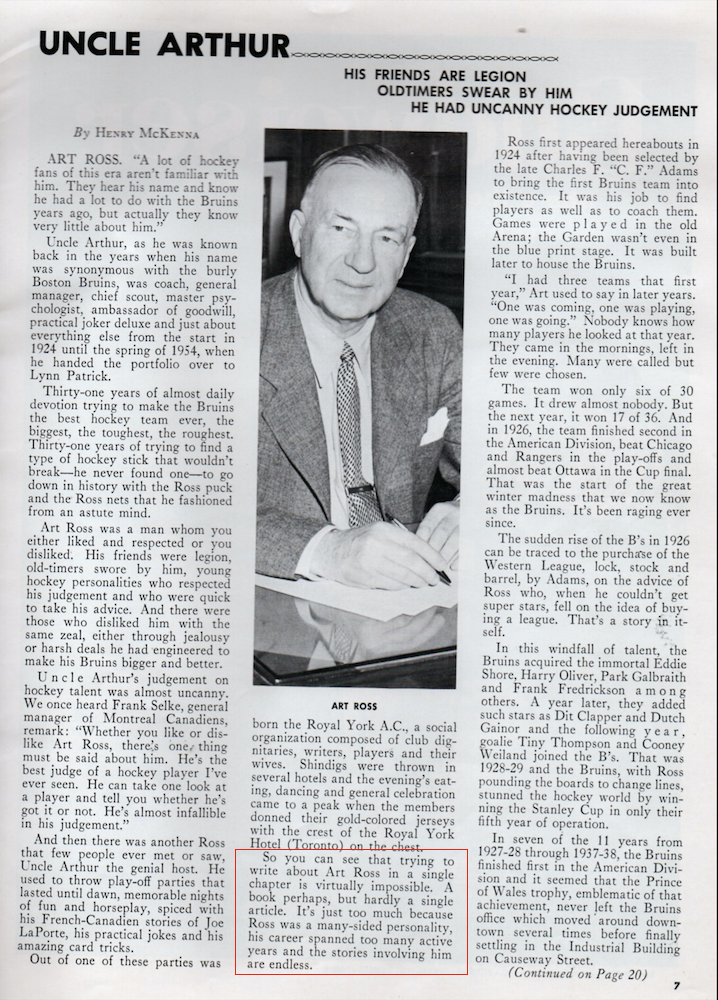
Back in February, while I will still hard at work on Art Ross: The Hockey Legend Who Built the Bruins, Art Ross III (who, along with his wife and his sisters, have all been great supporters – and great helps – on the project) sent me a few clippings from Boston Bruins programs he found in a family scrapbook. This story below appeared almost 44 years ago, on November 19, 1961, just over seven years after Art Ross had retired from the Bruins. Several bits and pieces from this article made their way into my biography … but I particularly liked where Henry McKenna noted: “So you can see that trying to write about Art Ross in a single chapter is virtually impossible. A book perhaps, but hardly a single article.”

Program

So, why has it taken so long for somebody to write this book? I offer a few thoughts on that, as well as why I wanted to be the one to write it, on the web site of my publisher, Dundurn. Rather than write it all again, you can have a look here if you’re interested.

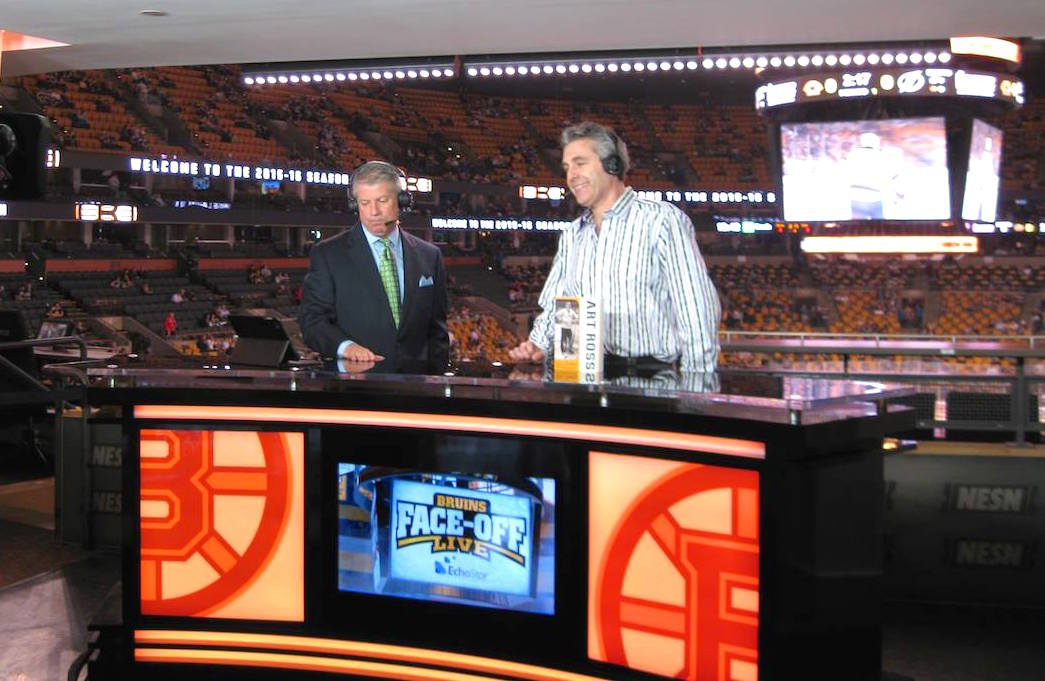
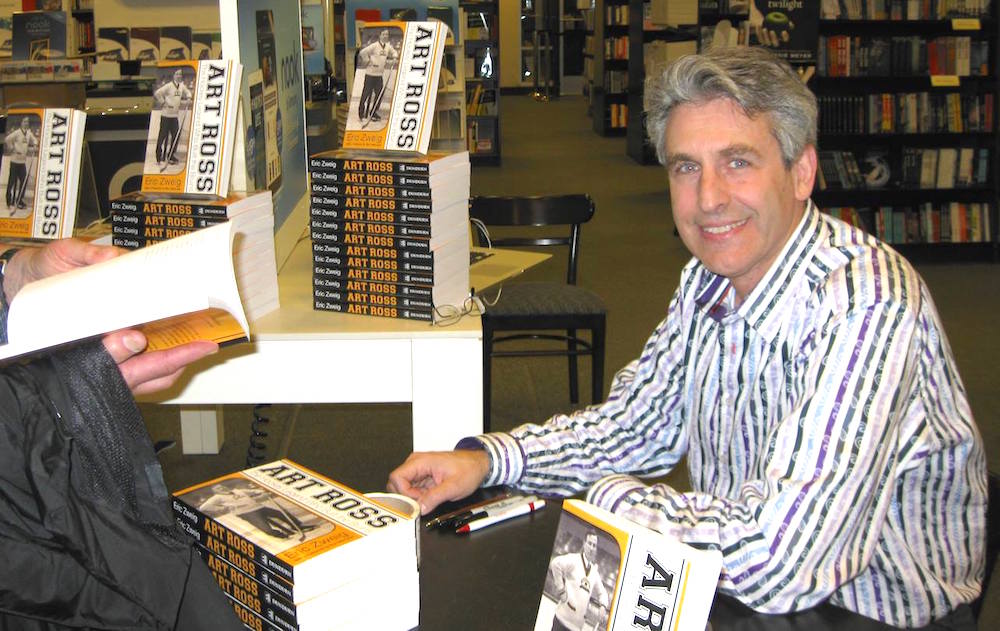
As many of you know, I’ve been out and about lately promoting the book. We had a launch in Toronto last month, and another a few days ago in Owen Sound (where the local Sun Times was the first to review the book). Barbara and I were also in Maine a couple of weeks ago for a wonderful Ross family long weekend, and then we visited Boston, where I appeared on the pregame show of a Bruins broadcast, caught up with some of the Bruins staff who had helped me along the way, and chatted with a couple of Bruins reporters.

Bruins
On the air with NESN’s Dale Arnold

If you’d like to see the interview I did, you have to be on Facebook, but this link should take you there. (The part with me starts 20 seconds in.) Otherwise, you can listen to the radio interview I did here in Owen Sound. In addition, there has been some great coverage from prolific American hockey writer and broadcaster Stan Fischler, and, most recently, this review from the Winnipeg Free Press. Upcoming is a radio interview with Dave Fisher on CJAD in Montreal. (Montreal friends, I’ll try to keep you posted on that one.)

Toronto
At Ben McNally Books in Toronto, wearing a Montreal Wanderers sweater loaned to me by
Society for International Hockey Research president Jean-Patrice Martel. Art Ross spent most of his playing career with the Wanderers.

Boston
Let’s just say the Barnes and Noble at the Prudential Center in Boston
has a lot of signed copies to sell

Owen Sound
Signing for fellow SIHR member Lorne Bell at the Owen Sound launch at The Ginger Press

Oh, and by the way, if you’ve already read the book and if you liked it, feel free to offer comments and reviews on web sites such as Chapters/Indigo, Amazon, Goodreads, or Barnes and Noble. I don’t honestly know if it makes much difference, but it couldn’t hurt!

We’ve Got a Series Now…

The Blue Jays gave me an early birthday present with a big victory last night! Hoping for a similar present on my actual birthday today.

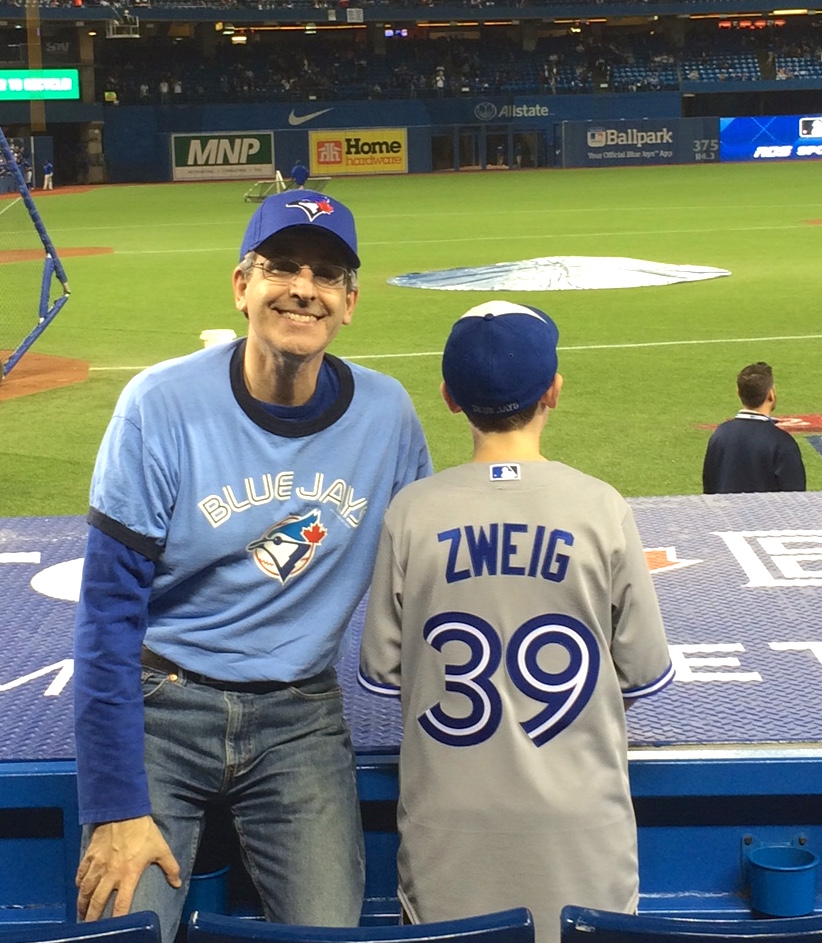
Me & Jorey
My nephew Jorey and me before the game last night.

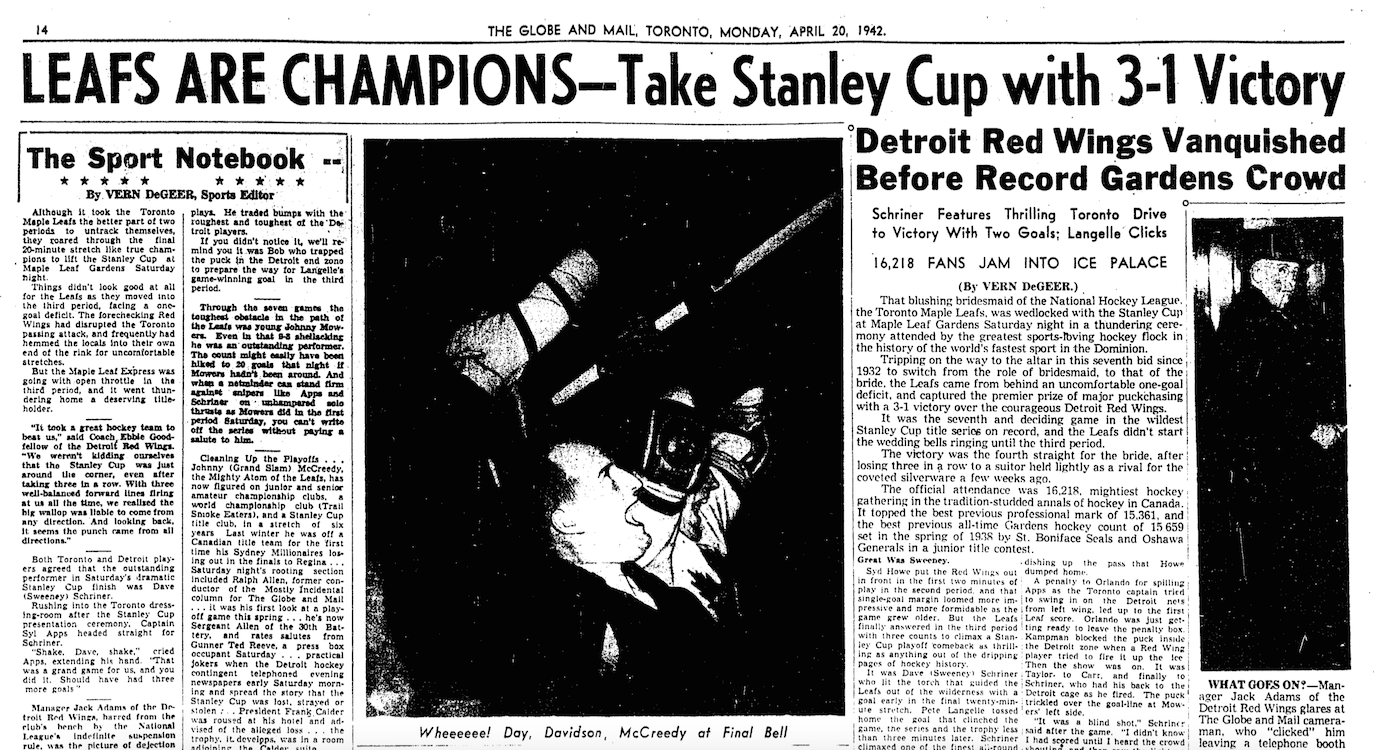
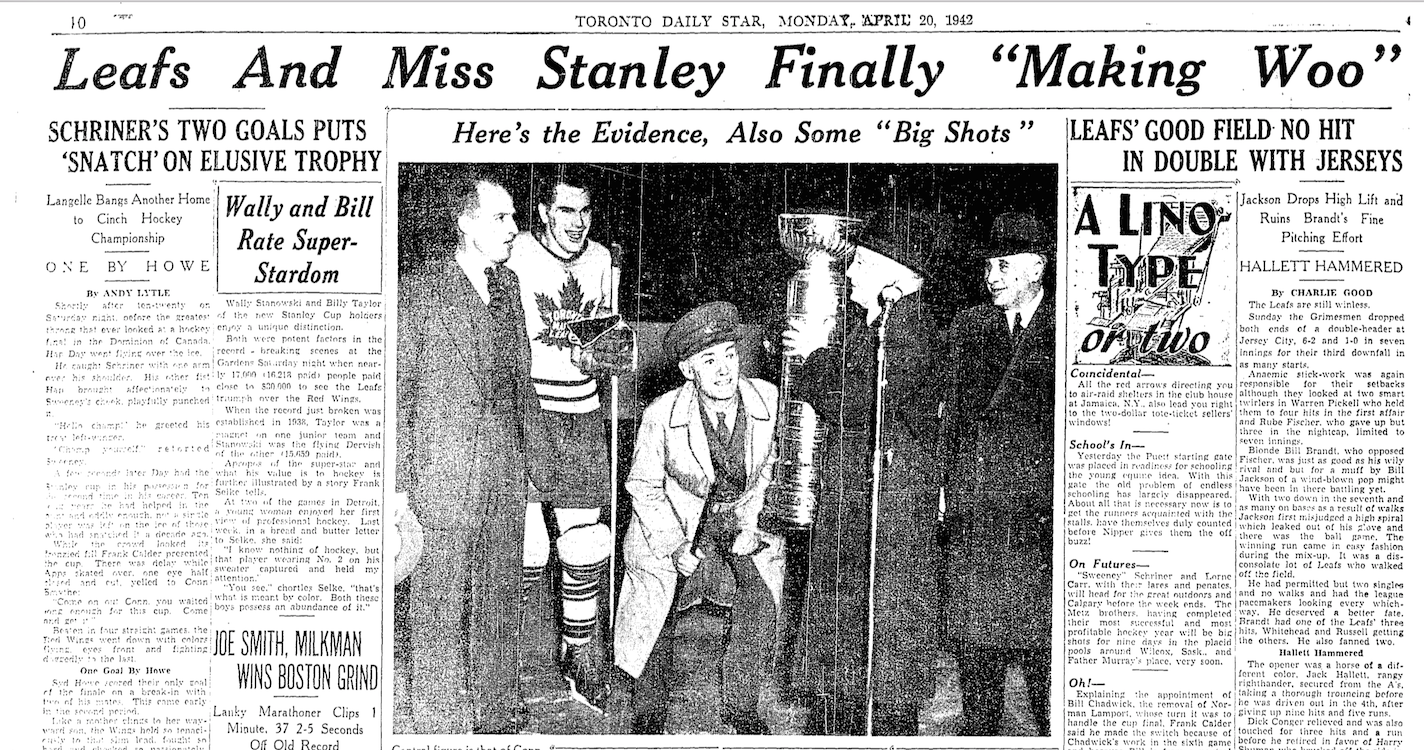
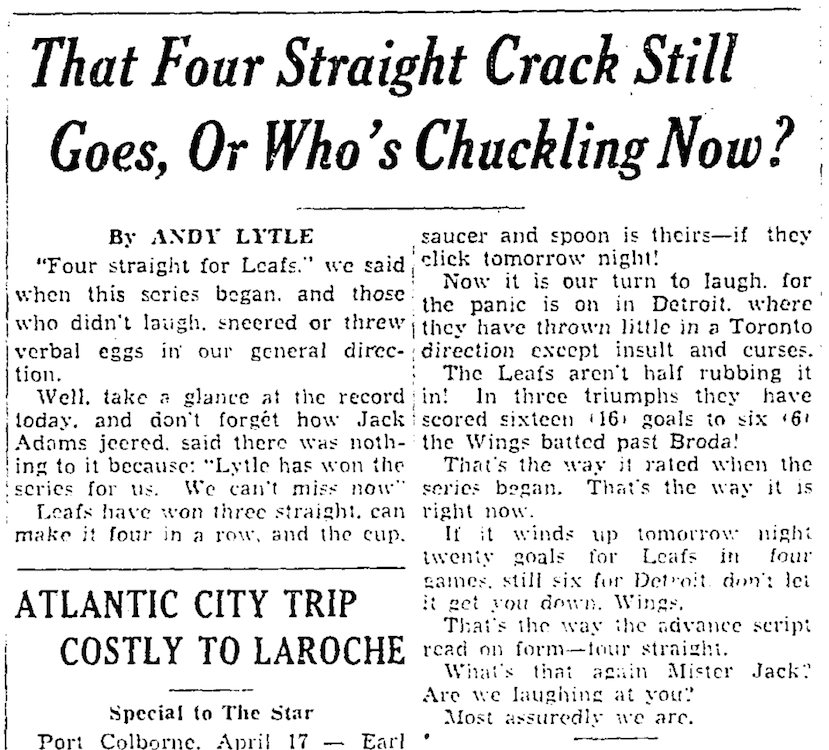
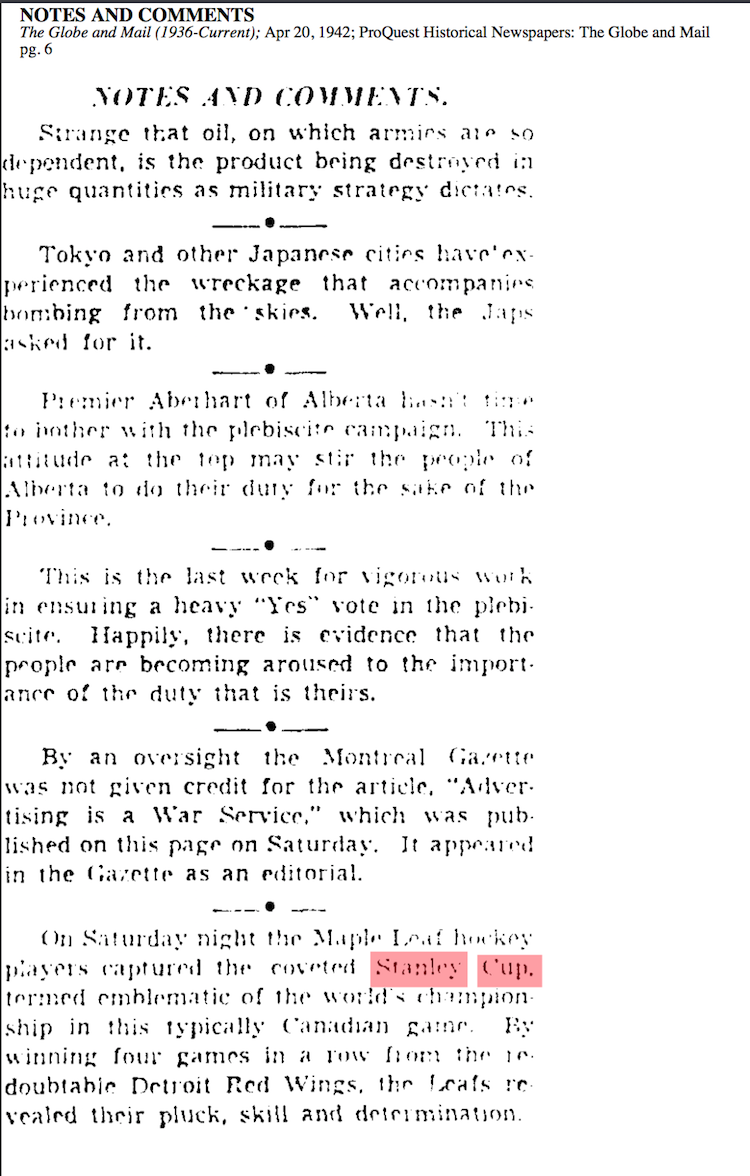
I was more than a little worried that they’d be facing the same challenge as the 1942 Toronto Maple Leafs, who were the first team in history to rebound from a three-games-to-nothing deficit in a best-of-seven series when they rallied to beat the Detroit Red Wings for the Stanley Cup.

Toronto media seemed pleased by that victory, but few seemed to note its historic significance. Perhaps that was because the Stanley Cup Final had only expanded to a best-of-seven in 1939. Then again, the World Series had been a best-of-seven (and sometimes a best of nine!) since the beginning in 1903, and nobody had pulled of this type of comeback there … and wouldn’t until the Boston Red Sox rallied to beat the Yankees in the 2004 American League Championship series.

Globe

Star

Lytle

Notes

Matty and Me

My first professional writing job came 30 years ago this month when, with the Blue Jays in the playoffs for the first time, I wrote a month-long “World Series Flashback” feature for the Toronto Sun and CHEX Radio in Peterborough.

Friday of this week (October 9) until Wednesday of next week (October 14) marks the 110th anniversary of probably the greatest pitching performance in baseball history. In games one, three, and five of the 1905 World Series, Christy Mathewson pitched three straight complete game shutouts in the space of six days. He tossed a total of 27 innings, while allowing just 13 hits and striking out 18 against only a single walk. Mathewson’s New York Giants defeated the Philadelphia Athletics four games to one.

Mathewson

In an era when baseball players were mostly roughnecks and hooligans, Christy Mathewson was a true gentleman. College-bred, tall, handsome, honest and articulate – not to mention one of the greatest pitchers in history – Mathewson helped make baseball respectable. Had there been a World Series MVP award in 1905, there’s no doubt who would have won it. Had I been alive at the time, I don’t think there’s any doubt who my favorite baseball player would have been. (I’ve always been a fan of great pitching.)

If you’ve read any of the articles I’ve posted on this web site over the past year – or anything I’ve written over the past 30 years – you’ve got a pretty good idea that I love sports history. As a boy, I played hockey and football and loved the Toronto Maple Leafs and the Argonauts. I was a horrible baseball player, but I’d watch the Expos on TV and began following the World Series in 1972 when I was still only eight years old. I saw my first live game in 1973 and was watching on TV in 1974 when Hank Aaron passed Babe Ruth with his 715th home run. Still, I didn’t really understand baseball and didn’t care much about it. It wasn’t until the Blue Jays came along in 1977 that everything changed.

I knew that both my parents had gone to minor league Maple Leafs baseball games when they were young. My mother, especially, loved baseball, and was the reason why my family got (and still has) our Blue Jays season tickets. I was first hooked late in the summer of 1976. There was a tent that year at the Canadian National Exhibition in Toronto hyping the city’s entry into the American League. In it, they were showing the official film of the 1975 World Series. Like so many people, I’d been captivated by that series the previous fall, and this was the first time I’d ever seen one of those “all access”-style films. By the time the Blue Jays took the field on April 7, 1977, I was more than ready to fall in love with baseball. Soon, every radio in the house was tuned to the Blue Jays broadcast. (Not a lot of television in those days!)

Superstar

With friends who were just as crazy for the fledgling team – and the most inexpensive tickets easy to come by at just two and thee dollars (sometimes less) – it was fun to follow the Jays even if they lost 100 games every season. We also picked pennant contenders to root for and tease each other about, but what really took my interest “to the next level” was my discovery of baseball’s rich history. That began with two things in 1978.

One thing was that my mother bought us Big-Time Baseball by Maury Allen. “A potpourri of major league happenings between 1900 and 1978,” says Google Books. “Includes records, anecdotes, photographs, and biographical information.” My brothers and I devoured it! (And, really, many of the books on hockey I’ve written for children haven’t been all that different from it.)

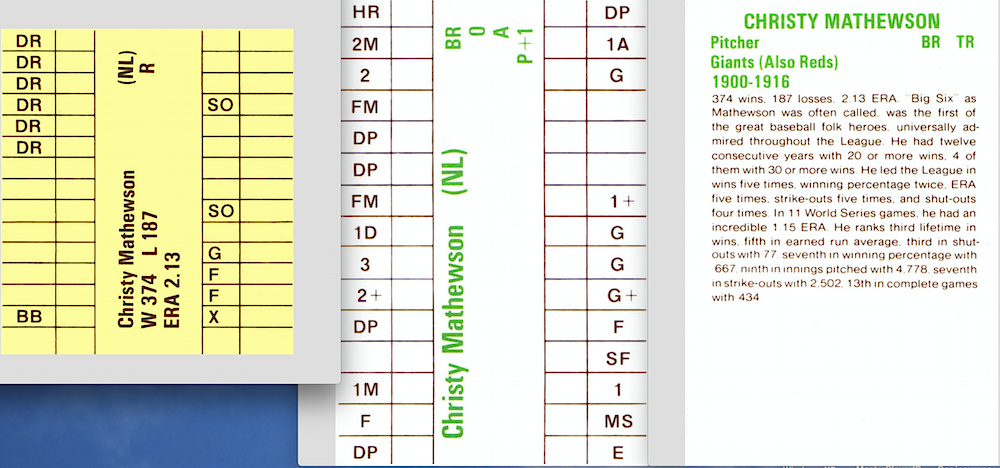
Big-Time Baseball is where I first learned of Christy Mathewson, but where I came to really know him was as the star pitcher on my own team in Superstar Baseball … the Sports Illustrated/Avalon Hill board game my brothers and I ordered by mail and received at the Christmas holidays in December of 1978. As the box says, Superstar Baseball lets you manage the greatest players of all time (though it’s an admittedly strange mix of all-time megastars and quirky oldtimers). In addition to the number and letter codes on the front of the player cards that let you play the game, the backs of the cards contained career numbers and interesting write-ups about the players’ careers. I read them all, and then started reading all I could about baseball history.

Christy cards

Perhaps Superstar Baseball isn’t the greatest of the dice-rolling/simulation games (I played ABPA Baseball and Football with my friends). Still, my brothers and I played it till we wore it out, ordered another, bought the second player set, and wore them out too. Almost 40 years later, we still play it when we have the time together, and are often joined now by my brother Jonathan’s son.

Over the years, we’ve traded players so many times it’s impossible to keep track of who’s had who, but David has always had Babe Ruth and Walter Johnson on his team, and Jonathan has always had Honus Wagner and Bob Gibson. My all-time all-timers are Rogers Hornsby and …Christy Mathewson.

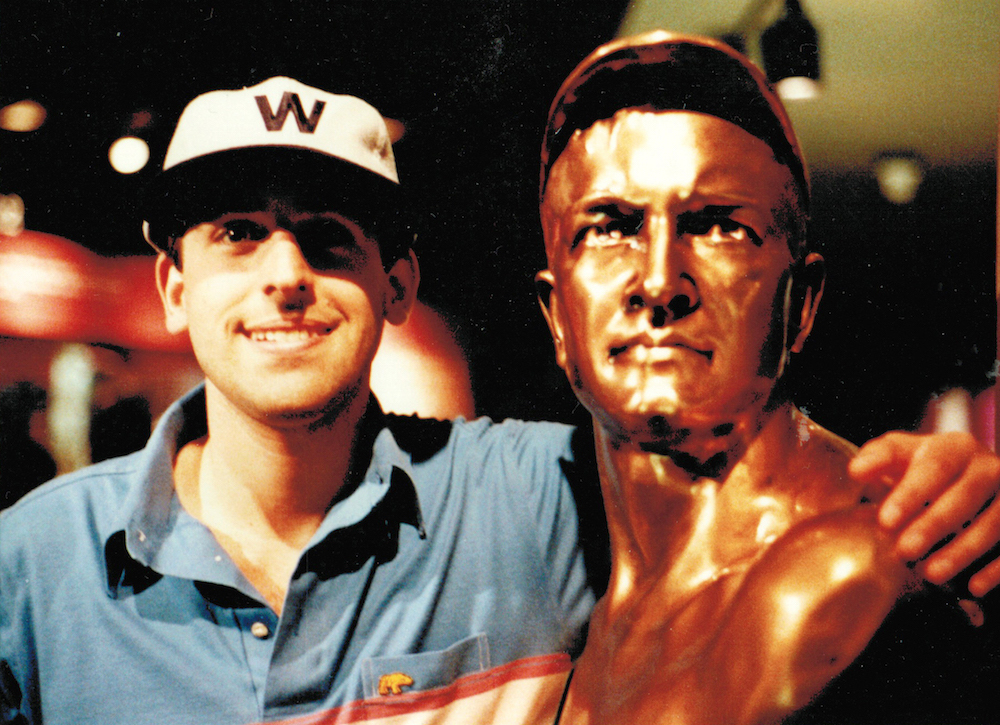
Me and Matty

If you’ve got a story about what hooked you on sports, or sports history, I’d love to hear it. Please feel free to comment. And GO JAYS GO!

Uncle Sam Says…

Let’s face it. As Canadians, we so often like to feel ourselves superior to Americans when they get caught up in their latest national drama. But we also crave their approval when things are going well for us … such as with a certain baseball team!

In the Toronto Star last Sunday, Raju Mudhar, in his Sports Media column, brought up the issue of Bob Costas raising the ire of Toronto fans back in the 1989 playoff series against Oakland when he commented that: “Elvis has a better chance of coming back than the Jays.” Scott Moore, president of Sportnet, said, “when you get a [U.S.] network guy who is not as biased towards the Jays, people think they’re biased against them… Costas didn’t hate Toronto. He wasn’t a home-team broadcaster that our viewers are used to.”

Personally, I remember on the field during the afternoon before the 1985 Championship Series with the Royals got under way, Costas proudly speaking of how he planned to stick up for Canada. How? By mentioning that despite the cool weather in Toronto that night, there was already snow in Denver – which people at the time were touting as an obvious expansion site. Um, thanks … I guess.

I also remember how, the next day, at least one Blue Jay (it’s been 30 years, but I think it was Buck Martinez, who missed the end of the season and the playoffs that year with a broken leg,) was disappointed that Tony Kubek – who had been the analyst on Blue Jays broadcasts since nearly the very beginning – had not been supportive enough of the team in game one in his main job on the NBC broadcast. So it’s not just the fans.

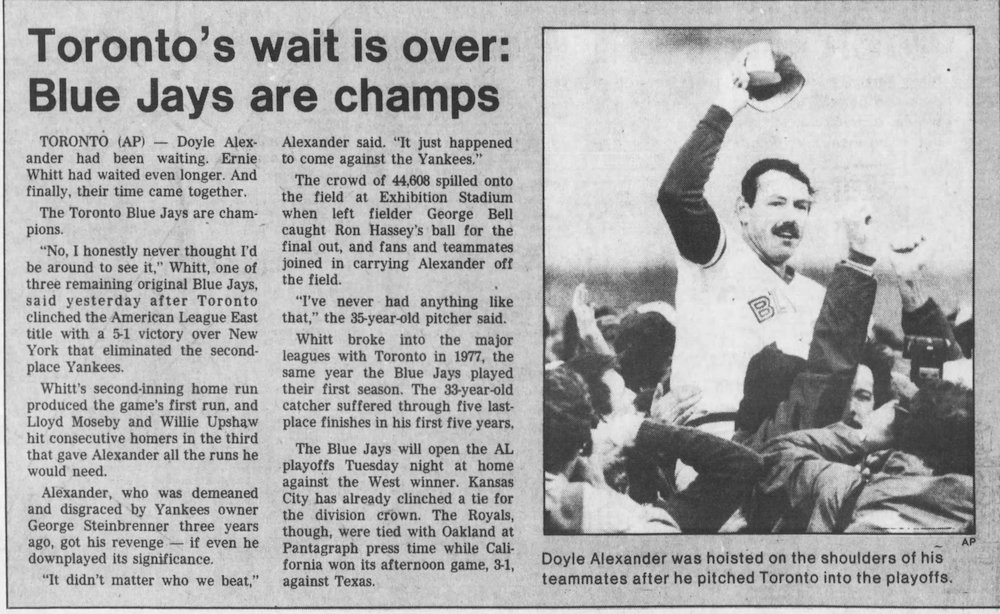
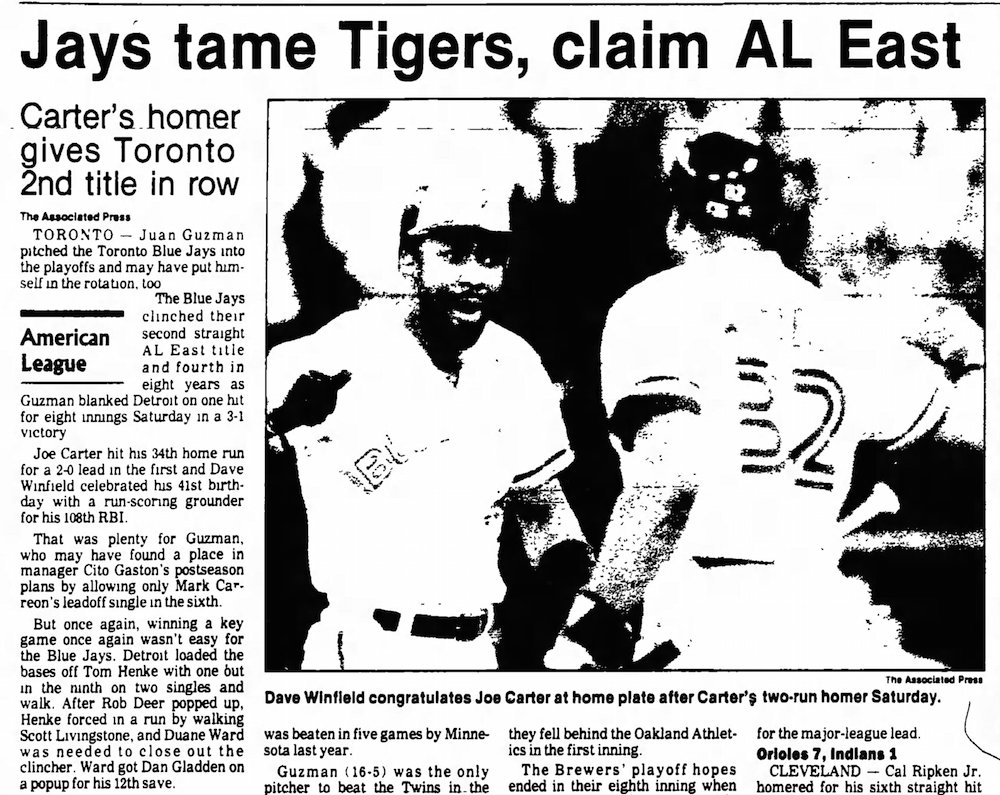
Generally speaking, the U.S. media has gotten behind this year’s Blue Jays. It’s hard not to rally around a team that’s on such a roll. Still, there was that whole “Beer League” business back in August. Anyway, here’s the American view of past Blue Jays division championships in newspaper stories the following day. And here’s hoping there’s another one to add as soon as tomorrow!

Clinching Date: October 5, 1985. Blue Jays 5, Yankees 1
1985

Clinching Date: Septmber 30, 1989. Blue Jays 4, Orioles 3
1989

Clinching Date: October 2, 1991. Blue Jays 6, Angels 5
1991

Clinching Date: October 3, 1992. Blue Jays 3, Tigers 1
1992

Clinching Date: September 27, 1993. Blue Jays 2, Brewers 0
1993